Generative AI Integration Services: Connecting ChatGPT-Style AI to Your Business
3 min read · By Hamza Amir · Updated November 7, 2026
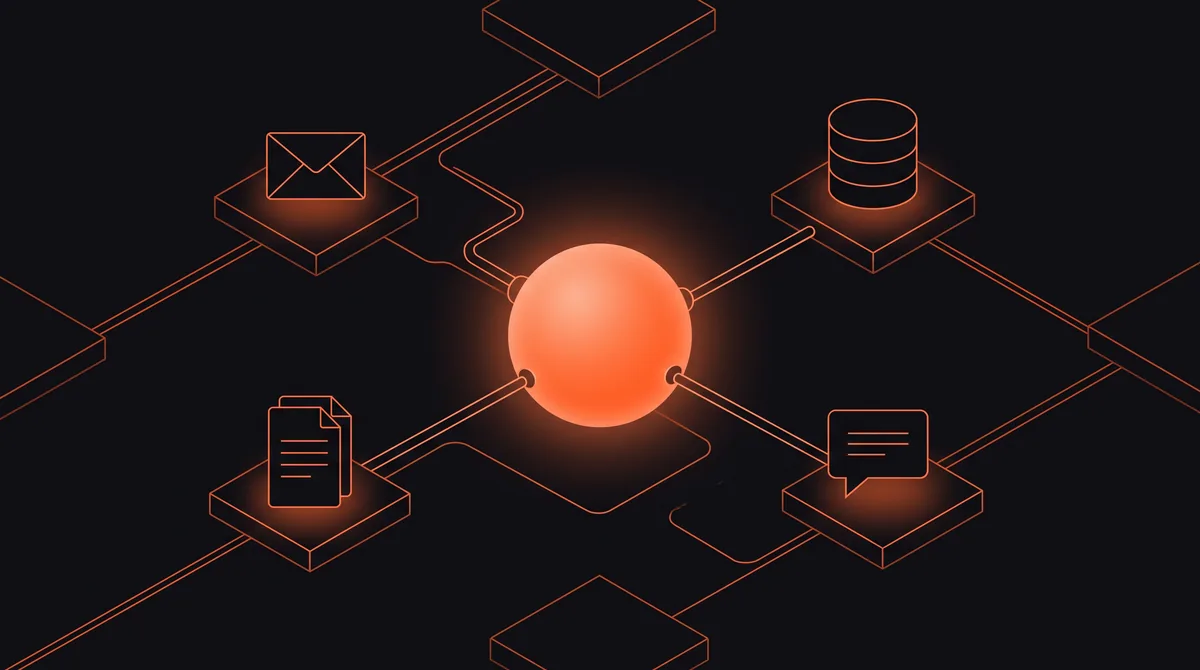
Generative AI integration means connecting a large language model, the kind of AI behind ChatGPT and Claude, to your own systems and data so it can do useful work inside your business, not just in a chat window. Generative AI integration services are the design and engineering work that makes that connection reliable and safe.
The value comes from the connection, not the model. A model on its own can write. A model connected to your help desk, CRM, documents, and inbox can answer customers from your own knowledge, draft replies with the right order history, read incoming documents, and update records.
Key takeaways
- Integration connects an AI model to your data and tools so it can act on real information.
- Common uses: support answers, document reading, email drafting, lead qualification, internal search.
- Ground answers in your own data and keep a human in the loop for risky actions.
- Start with one workflow and measure it before expanding.
- You pay for the build plus the model's usage fees.
Common generative AI integration use cases
- Customer support: answering routine questions from your help center and order data, and routing the rest with context. A DTC SaaS company we worked with resolved 58% of tickets without a human.
- Document processing: reading invoices, contracts, and forms and extracting the fields you need.
- Email drafting: preparing replies that use the right customer history for a person to approve.
- Lead qualification: reading inbound inquiries, scoring them, and routing them to the right rep.
- Internal knowledge search: letting staff ask questions of your own documents. See AI and RAG systems.
- Reporting: summarizing activity and data into weekly briefings.
How generative AI integration works
Most integrations share the same building blocks:
- Triggers: a new ticket, email, form, or document starts the workflow.
- Context retrieval: the system pulls the relevant records and documents for that case.
- The model call: the AI model receives the request plus the context and clear instructions.
- Guardrails: checks on the output, confidence thresholds, and rules about what it may do alone.
- Action: the result is written back to your tools, or sent to a person for approval.
- Logging: every step is recorded so you can audit and improve it.
This is the same pattern behind most AI agents, and it is why integration work, not the choice of model, usually decides whether a project succeeds.
Looking to hire, not just research?
See how our AI consulting and implementation works: what is included, the process, and pricing (pilots from $8k to $35k, live in 4 to 8 weeks).
Security and data handling
Before connecting AI to business data, settle a few basics: which data the model may see, where it is processed, how long providers retain it under your plan, and which actions require human approval. Keep sensitive actions such as refunds, payments, or contract changes behind a person until the system has earned trust.
For businesses with strict requirements, private deployments are an option. See private AI for business.
What does generative AI integration cost?
There are two parts. The build covers design, engineering, testing, and deployment. Our fixed-scope pilots typically cost $8k to $20k for growing-business workflows and $12k to $35k for more complex or AI-heavy systems. Then there are usage fees from the AI provider, billed by how much text the model processes, plus any software the workflow runs on.
For most single workflows, usage fees are small compared with the time saved, but estimate them from your real volumes before you commit. Read AI automation cost for a fuller breakdown.
How to choose a generative AI integration partner
- Ask for systems they have running in production, with results.
- Make sure they build inside your existing tools rather than adding a new platform.
- Check how they handle guardrails, approvals, and logging.
- Get a fixed scope and price for the first workflow.
- Confirm you will own the code, prompts, and documentation.
We integrate generative AI into real workflows as part of our AI consulting and implementation and AI integration services. Book a scoping call to find your best first use case.
They are the design and engineering work that connects a generative AI model, like the ones behind ChatGPT, to a company's own systems and data so it can answer, draft, extract, and act inside real business workflows.
Ready to put AI to work in your business?
See what our AI consulting and implementation includes, how it runs, and what it costs. Or book a scoping call and get a fixed-price scope within 48 hours.
Response time
Within 1 business day
Coverage
USA · UK · EU
Team
15 people · 10 engineers