What Is Business Process Management (BPM)? A Practical Guide
7 min read · By Hamza Amir · Updated November 2, 2026
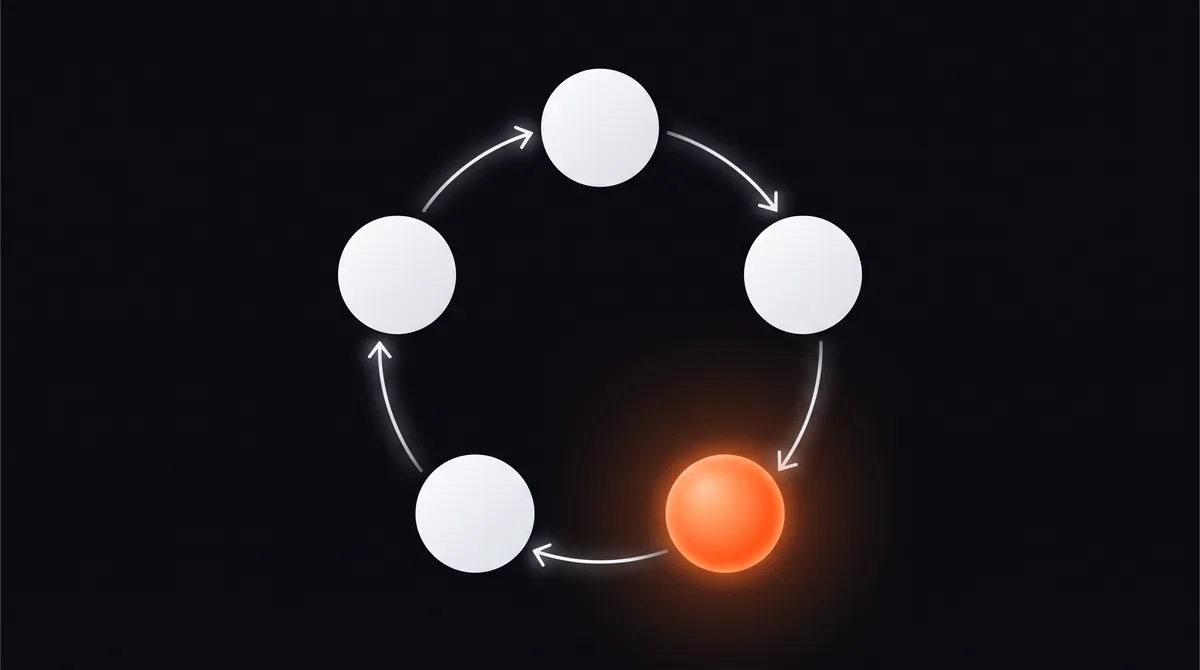
Business process management (BPM) is the discipline of designing, running, measuring, and continuously improving the way work flows through an organization. Instead of fixing problems one at a time, BPM treats processes such as order to cash, hire to retire, or lead to customer as assets that can be mapped, standardized, automated, and improved.
BPM has a shared language for mapping processes: BPMN, Business Process Model and Notation. The Object Management Group formally released BPMN 2.0 in January 2011, and it was later published as the international standard ISO/IEC 19510 in 2013.
Key takeaways
- BPM is a discipline for designing, running, measuring, and improving processes.
- The lifecycle: design, model, execute, monitor, optimize.
- BPMN 2.0 (OMG, January 2011; ISO/IEC 19510 in 2013) is the standard notation.
- Workflow automation and RPA are tools inside BPM, not replacements for it.
- Small teams can apply BPM with a whiteboard, a few metrics, and targeted automation.
The BPM lifecycle
BPM runs as a continuous loop:
- Design: define the process goal, owner, inputs, and outputs.
- Model: map the steps, decisions, and handoffs, often in BPMN.
- Execute: run the process, increasingly with workflow automation.
- Monitor: track cycle time, errors, and bottlenecks.
- Optimize: remove waste, automate repetitive steps, and repeat.
BPM vs workflow automation vs RPA
These terms are often confused. Here is how they relate:
| Business process management | Workflow automation | RPA | |
|---|---|---|---|
| What it is | A management discipline | Software that runs steps between systems | Software robots that operate screens |
| Scope | End-to-end processes and improvement | Specific workflows | Specific repetitive screen tasks |
| Focus | Design, measurement, governance | Execution | Execution on legacy apps |
| Example | Redesigning order to cash | Auto-creating invoices from orders | Copying data into an old ERP |
In short, BPM decides what the process should be; automation and RPA carry out parts of it. See what is workflow automation and what is robotic process automation.
Want an automation like this built for you, free?
Pick one of 10 ready automations, like instant lead replies, review requests, or invoice follow-ups, or describe your own. We build it on your tools at no cost.
Benefits of business process management
Done well, BPM delivers:
- Consistency: work gets done the same way every time.
- Speed: fewer handoffs and waits shorten cycle times.
- Visibility: managers see where work is stuck.
- Better automation: you automate a good process, not a broken one.
- Compliance: documented processes and audit trails.
BPM for small and mid-size businesses
You do not need a BPM suite to benefit. Pick one process that hurts, map it on a whiteboard with the people who do it, mark where work waits or gets re-entered, agree on two or three metrics, and automate the repetitive steps with the tools you already use. Then review monthly. That is BPM in practice. For a broader starting point, see how to automate your business and AI business process automation.
We map processes and automate them end to end through our workflow automation service. Want to see one done? Claim a free automation.
Business process management is the discipline of designing, modeling, executing, monitoring, and continuously improving business processes so work flows consistently, quickly, and measurably across an organization.
Want this built on your systems?
Get a free automation teardown. We'll map the top 3 workflows we'd automate in your business and what they'd save, in 20 minutes, no commitment.
Response time
≤ 4 business hours
Coverage
USA · UK · EU
Team
10 engineers · 1 PM